

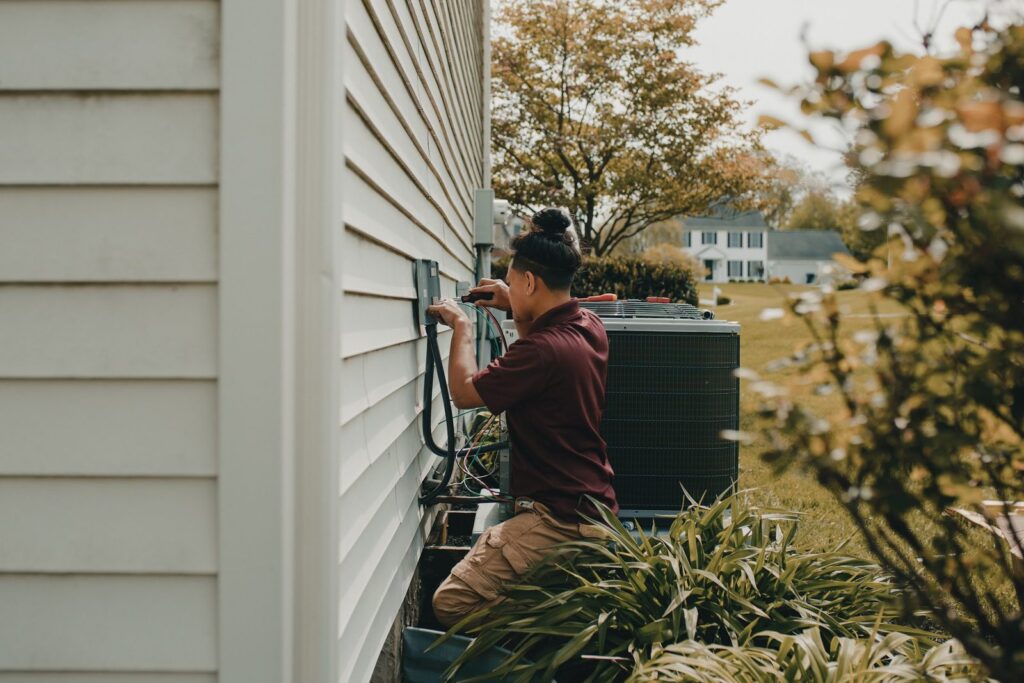
For a heating system replacement, start with what the house already has. With gas service and working ducts, a new high-efficiency gas furnace is usually the right replacement: it wastes far less fuel than older equipment, sealed-combustion models lower the risk of backdrafting, and gas is often the cheaper fuel to heat with in Pennsylvania. If you heat with oil, propane or electric baseboard, moving to a heat pump, or from oil to natural gas where it’s available, is an upgrade in almost every way. Homes with radiators and no central air are often best served by ductless heat pumps. Decide before the first hard freeze: a planned replacement leaves every option open, and a January breakdown narrows them to whatever can go in fastest.
The first cold nights of the season are when a tired heating system shows it: short cycling, a burner that takes several tries to light, rooms that never catch up. If that’s where you are, this guide walks through the real choices by starting point, because the right answer for a house with a gas furnace and central air is rarely the right answer for a farmhouse with an oil boiler and radiators.
Not sure yet whether you need a new system at all? Start with is it worth repairing a 15-year-old furnace. A sound system with a repairable fault should be repaired. If age is the question, see how old is too old for a furnace.
Why decide on a heating system replacement before winter
- You choose the equipment, not the calendar. A planned replacement lets you compare options side by side. A no-heat call in January tends to end with whatever can be installed that day.
- Some upgrades take lead time you don’t control. Converting to natural gas depends on the utility’s schedule for the service line and meter, which is why it’s worth starting in the fall rather than after a breakdown.
- Installation itself is fast. Next-day installation is very regularly available, and our average is about four days from first inquiry to a finished install. The deciding is what takes time, so it’s worth doing while the house is still warm.
- If your system is sound, replacement isn’t the answer. A pre-season tune-up is. See how often your furnace should be serviced. Repair and maintenance service is available in Lancaster County.
Your options side by side
| Option | Usually the right call when | Main advantage | What to confirm first |
|---|---|---|---|
| New gas furnace | You already have gas service and ducts that work | Reuses what’s there; gas is often the cheaper fuel in PA | Real AFUE gain, sizing, venting, duct condition |
| Heat pump (ducted) | You’re leaving oil, propane or electric resistance heat, or you want one system for heating and cooling | Heating and air conditioning in one system | Cold-weather capacity, house heat loss, electrical service |
| Ductless heat pump | No ducts: radiators, baseboard, additions, converted spaces | Adds heating and air conditioning without ductwork | A head for every room you need to heat, electrical service |
| Dual fuel | You want a heat pump for milder weather and a gas furnace for the coldest days | Runs on whichever is cheaper at the moment | Changeover settings, rates, compatibility |
| Convert oil to gas | Gas is at the street, the utility can connect you in time, and your oil equipment is due | No oil deliveries or tank to maintain | Utility schedule, indoor piping, venting |
| Stay with oil | No gas available and the existing system still distributes heat well | Least disruption | Tank condition, fuel cost, hot water, maintenance |
The table is a starting point. A good recommendation explains why an option fits your house, not which equipment carries the highest rating.
First, identify what you have
Four questions decide most of this:
- Furnace or boiler? A furnace heats air and pushes it through ducts. A boiler heats water or makes steam for radiators or baseboard. They lead to different replacement paths. If you’re not sure which fuel your furnace uses, see is my furnace gas or electric.
- Ducts or no ducts? Ducted homes can take a new furnace or a ducted heat pump. Homes with radiators can’t simply swap in a furnace; they need a boiler or a ductless system.
- Does the heating system also make your hot water? Many oil boilers do. Removing the boiler means you need a separate water-heating plan.
- Do you have central air, and how old is it? If the AC is near the end too, you’re pricing two systems, and that changes the comparison. See how long an air conditioner should last.
For a broader overview of system types, see the types of HVAC systems.
If you have a gas furnace
For most homes with working gas service and sound ducts, a new high-efficiency gas furnace is the right replacement. Natural gas is often the cheaper fuel for heating in Pennsylvania, and you don’t have to change fuels to improve your heat.
What a new gas furnace improves
Efficiency. Older furnaces and boilers ran at roughly 56% to 70% efficiency, while modern ones reach up to 98.5% AFUE, according to Vermont’s state energy office. ENERGY STAR certified gas furnaces for northern states are up to 18% more efficient than baseline models. Many older furnaces also send warm indoor air up the chimney, or burn a pilot light around the clock. Both are wasted fuel.
Safety. Many high-efficiency gas furnaces use sealed combustion: they pull combustion air from outside through a dedicated pipe and vent exhaust straight outdoors, with no draft hood or chimney draft. Vermont’s energy office notes that this lessens the likelihood of backdrafting, and that in furnaces without sealed combustion, backdrafting of combustion gases can be dangerous. A new furnace is only as safe as its venting and installation, so keep working carbon monoxide alarms either way.
What the upgrade is worth
Compare the actual efficiency ratings rather than assuming new means much better. AFUE measures how much of the fuel you buy becomes heat over a season. Moving from an 80% furnace to a 95% furnace needs about 16% less gas for the same heat, calculated as 1 − (80 ÷ 95). That’s fuel use, not your whole bill: fixed utility charges don’t shrink, and real savings depend on the weather, your thermostat habits and the installation. How HVAC efficiency ratings work.
If your air conditioner is the same age as the furnace, replacing both at once usually saves a second installation visit. See furnace replacement and installation and central AC installation and replacement. If the AC is newer and reliable, keep it. Replacing a furnace never requires replacing a sound air conditioner.
If you’d rather have a heat pump
Some gas homeowners choose a heat pump anyway, and that’s a reasonable goal, not a default. Good reasons to consider one:
- One system for heating and cooling, instead of a furnace and an air conditioner
- Dual fuel flexibility: a heat pump paired with a gas furnace, so the system can run on whichever is cheaper at your rates. See how a hybrid system works.
- Fewer fuel-burning appliances in the house
- Ductless heads for the rooms the furnace never reaches, such as additions or a finished attic
If one of those is your goal, we’ll price it alongside the furnace. If it isn’t, a gas furnace is a sound choice.
If you heat with oil or propane
Moving off oil is an upgrade in almost every way, whether you go to a heat pump or to natural gas. Oil heat is mostly a Pennsylvania and New York question: about 82% of the 4.79 million U.S. homes that heat with oil are in the Northeast.
Switching to a heat pump
NYSERDA puts it plainly: the cost of operating a heat pump is typically less than oil, propane or electric resistance heat. A heat pump also adds air conditioning, which many oil-heated homes don’t have. More on heat pump installation and how a heat pump works.
It’s still a design job, not a swap:
- Ducted heat pumps need suitable ductwork, which is common with oil furnaces and not with boilers.
- Ductless mini-splits serve rooms or zones without ducts, which makes them the natural fit for radiator and baseboard homes. DOE identifies ductless heat pumps as an option for homes with non-ducted heating. The design has to cover every room you expect to heat, including bedrooms with the doors closed. See ductless mini-split installation and how split systems work.
- A standard air-source heat pump heats air, not the water in your radiators. If you want to keep the radiators, that’s a boiler decision, not a heat pump one.
- Your electrical service may need work. Moving heating onto electricity can require panel or service upgrades in older homes. It belongs in the estimate, not as a surprise afterward.
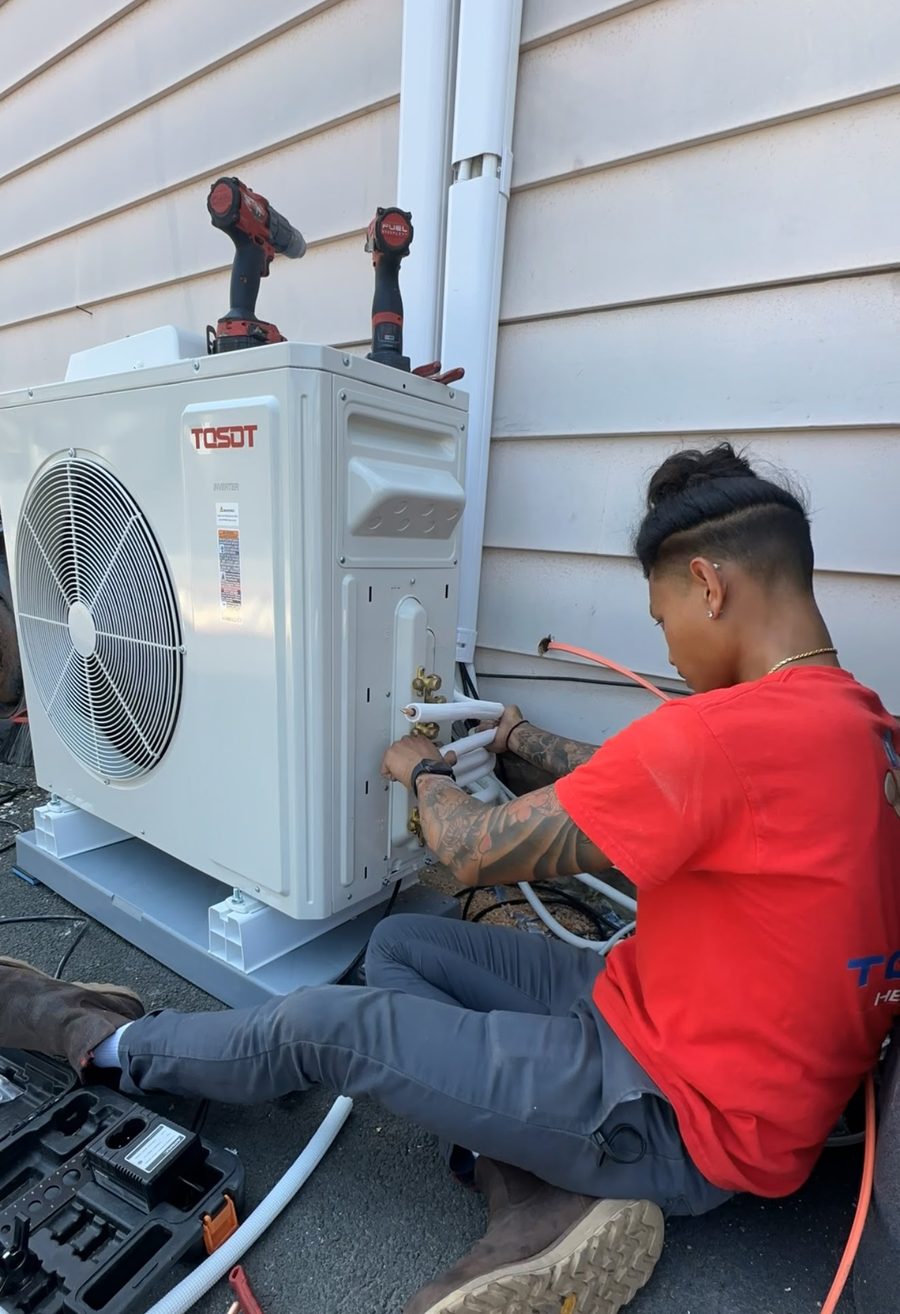
Leaving oil usually means the old oil furnace or boiler comes out, and that can be part of the same installation.
“A great experience upgrading to a heat pump system from oil. … They handled everything including removing and hauling the old furnace. Clean & neat installation.”
— 5-star Google review
Converting oil to natural gas
Conversion makes sense when gas is at the street, your oil equipment is due for replacement anyway, and the utility can connect you before you need the heat.
Gas in the street doesn’t mean the house is ready. The utility designs the service line, pulls permits, installs the line and sets the meter, and your contractor connects the meter to your equipment. UGI lays out those steps here. The utility’s part runs on the utility’s schedule, which is the main reason to start a conversion in the fall.
A complete conversion covers:
- Coordination with the utility on the service line and meter
- Indoor gas piping sized for every gas appliance you’ll run
- The new furnace or boiler, venting and combustion air
- Chimney and water-heater venting changes, if any
When Topline does a conversion, we handle all of it, in every market we serve. You shouldn’t have to manage the pieces yourself.
Don’t assume an old oil appliance can simply take a gas burner. Any appliance conversion needs approval for that specific unit.
Staying with oil
Keeping oil can make sense when gas isn’t available, the heat distribution works well, and a switch would add more disruption than it’s worth. Budget honestly for tank condition, fuel price swings and maintenance, and check whether the oil boiler also supplies your hot water.
If you have electric baseboard or an electric furnace
A heat pump is the biggest efficiency upgrade available to an all-electric home. Electric resistance heat turns each unit of electricity into one unit of heat. A heat pump moves heat instead of making it, which is why NYSERDA groups electric resistance with oil and propane as more expensive to run than a heat pump.
- Electric furnace with ducts: a ducted heat pump can use the same ductwork, often with the electric strips kept as backup heat.
- Baseboard heat: ductless heads can take over the heating and add air conditioning. The baseboards can stay in place as backup.
Do heat pumps work in our winters?
Yes, cold-climate models are built for it. The real question is whether the specific system can heat your specific house on the coldest days.
To earn ENERGY STAR’s cold-climate designation, a heat pump has to deliver at least 70% of its 47°F heating capacity at 5°F, and produce at least 1.75 units of heat for every unit of electricity it uses at that temperature. See ENERGY STAR’s cold-climate criteria. That’s a strong product test. It isn’t a guarantee for every home.
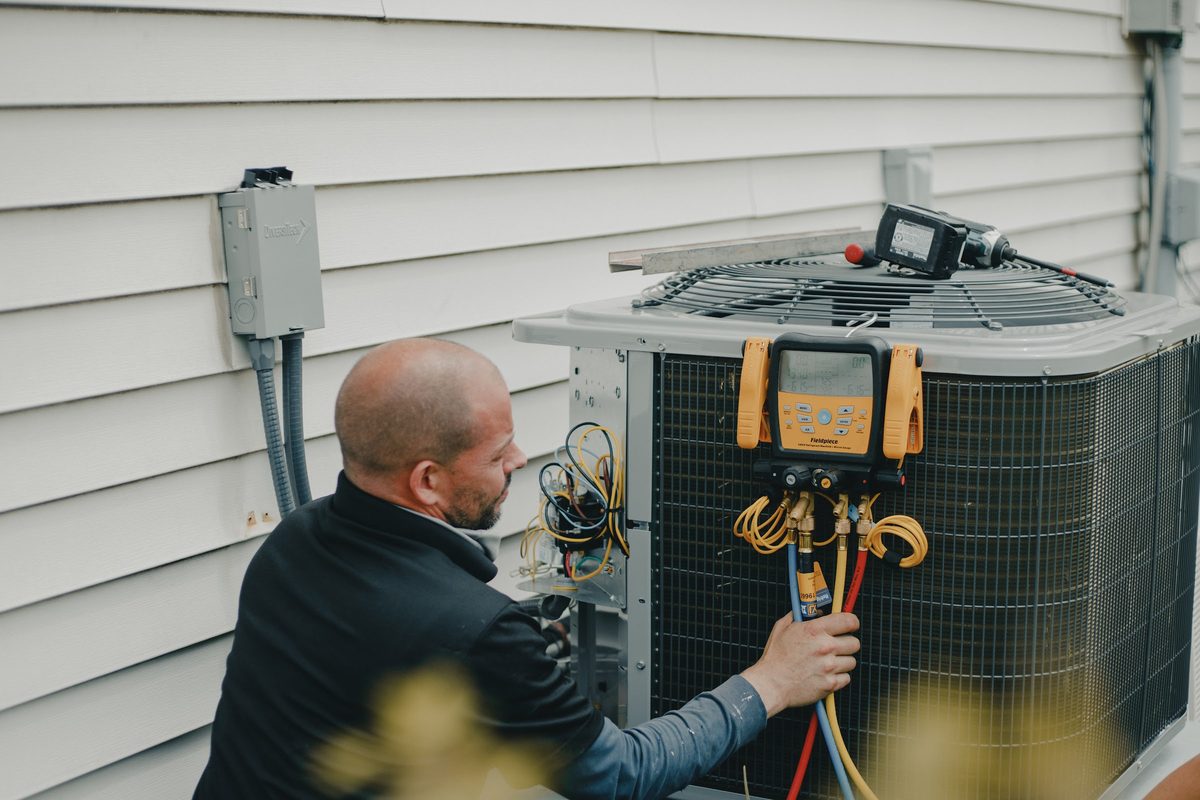
Ask your contractor to show you:
- Your home’s calculated heating load
- The proposed equipment’s heating capacity at your local winter design temperature
- Whether backup heat is needed, what kind, and how often it’s expected to run
- Any electrical work the system requires
Sizing works in both directions. A bigger unit isn’t a safer one: an oversized system short-cycles, and sometimes the right replacement is smaller than the equipment coming out.
“On install day I had an old, defunct, 5 Ton heat pump unit removed and an appropriate 3 Ton installed, all completed in about five and a half hours.”
— Sheridan K., Google review
Outdoor placement, clearance above the snow line and defrost drainage belong in the plan too.
Which one costs least to run?
It depends on your rates, and anyone who gives you a single answer without asking for your bills is guessing.
- Against oil, propane or electric resistance heat, a heat pump usually costs less to run.
- Against an efficient gas furnace, gas is often cheaper in Pennsylvania. It depends on your gas and electric rates and on how well the system is matched to the house.
A real comparison needs your electricity rate including delivery charges, your gas, oil or propane price, the efficiency of the equipment you’d install, the heat pump’s expected seasonal performance including backup heat, and the fixed charges that would actually disappear. If you keep gas for cooking or hot water, you keep paying its monthly service charge.
Compare the scope as well. A furnace-only quote and a heat-pump quote that includes air conditioning are different purchases. Ask for heating-only and heating-and-cooling options side by side. For current incentives, see what still lowers the cost of a new system in 2026.
If your heat is broken right now
Get a diagnosis first. A breakdown creates urgency, but it doesn’t make a fuel change the right call.
- Gas furnace, working ducts: replacing the furnace is usually fastest.
- Oil heat, no gas connection: compare a heat pump against replacing the oil equipment. Don’t plan around gas until the utility gives you a date.
- Oil boiler and radiators: settle the hot water question before choosing equipment. Ductless heat pumps can go in without disturbing the radiators.
- A sound system with a repairable fault: repair it. Replacing equipment early is the most expensive way to fix a cheap part.
“Our oil furnace died on thanksgiving day. … Installation was seamless. They were on time, professional, and had our homes heat back on in just a few hours.”
— Kate B., 5-star Google review
If a carbon monoxide alarm sounds or you smell gas, leave the house first and call 911 or your gas utility from outside. CPSC recommends an annual professional inspection of fuel-burning heating systems and working CO alarms on every level of the home.
What we look at on a replacement estimate
To compare these options honestly, we look at the house rather than the equipment: its heat loss, whether you have ducts or radiators and what condition they’re in, whether the heating system also makes your hot water, the age of your air conditioner, your electrical service, gas availability at the street, and any rooms that have never been comfortable. Bring a recent energy bill or two and photos of your equipment labels, and the comparison gets specific quickly. Here’s what to expect on installation day. Comparing proposals from more than one contractor? See why HVAC replacement quotes are so different and how to compare them.
The estimate is free, in your home, and carries no obligation. The recommendation follows the house. That may be a new gas furnace, a heat pump, a ductless system, a conversion, or keeping equipment that still has life in it. Financing is available, subject to credit approval, eligibility and lender terms.
Get your heating sorted before the cold sets in
Next-day installation is very regularly available. Our average is about four days from first inquiry to completed installation. Timing depends on equipment, location, scope, permits and scheduling, and a new gas utility connection runs on the utility’s timeline, not ours.
Request your free new-system estimate or call (855) 822-2270.
We provide new-system estimates in and around Lancaster, Scranton, State College, Dayton, Canton, Pittsburgh and Rochester. Contact us to confirm coverage for your address.
Repair and maintenance service is available only in Lancaster County. Outside Lancaster County, appointments are for new-system estimates and installation.