

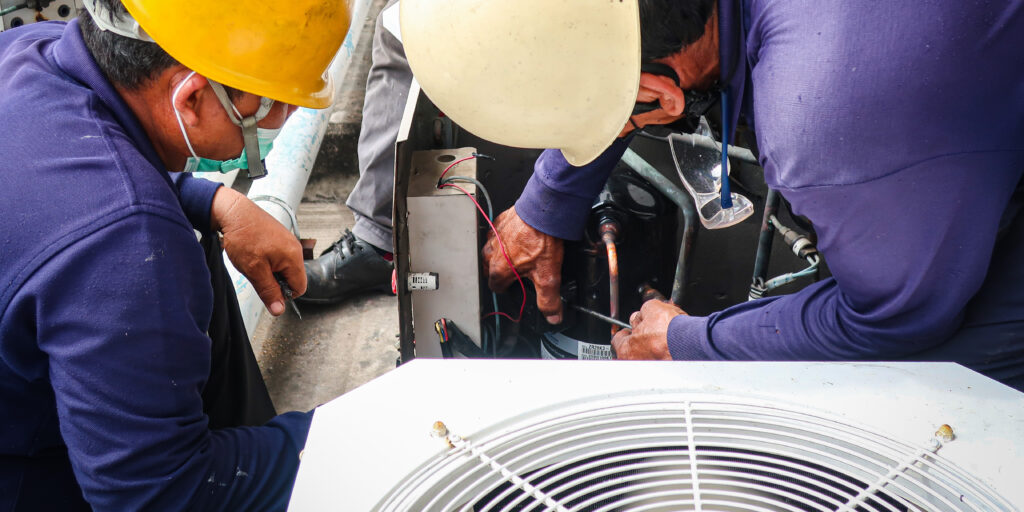
A heat pump moves heat rather than burning fuel to create it. In cooling, it absorbs heat from indoor air and releases it outdoors, exactly like an air conditioner. In heating, a reversing valve switches the direction of refrigerant flow so the system absorbs heat from outdoor air, which still holds usable heat well below freezing, and releases it inside. Modern cold-climate models keep useful heating capacity at Pennsylvania winter temperatures.
Experiencing the need for HVAC repairs or have questions regarding heat pumps? Call the highly trained professional team at Topline Heating & Air at (855) 822-2270 today!
Are you looking to install a heat pump in addition to your current HVAC system? Are you wondering how does a heat pump work?
If so, it’s time to seek the help of HVAC professionals. Whether you want answers to your heat pump questions, need annual maintenance on your current heating system, or need repairs, Douglassville’s HVAC professionals at Topline Heating & Air are the team to count on.
What Is a Heat Pump?
A heat pump is a heating and cooling device that homeowners may have in addition to a furnace. Depending on your system type, it pulls heat out of various places before using it to heat or cool your home.
A heat pump has an outdoor unit and an indoor unit and uses electricity, so it doesn’t require burning gasoline or oil to produce heat. Modern cold-climate heat pumps hold useful heating capacity well below freezing, including through Pennsylvania winters. However, they’re great as a primary heating and cooling system to save money and improve overall energy efficiency.
How Does a Heat Pump Work?
In short, a heat pump takes heat from one area and then redistributes that heat indoors. More specifically, heat pumps absorb heat from the outdoor air or the ground. In the summer, it takes the hot air outside before running through refrigerant and a compressor to cool off your home.
In the winter, the reversing valve switches automatically, so your heat pump takes warm air from outside before running it through a pressurized compressor and evaporator that heats the air further before pushing it into your home.
Parts of Heat Pump Systems
So, how does a heat pump work? There are many components that make up heat pump systems. These components include the condenser and evaporator coils which either pressurize or evaporate heat, and the condenser coil sits in the outdoor unit while the evaporator coil sits indoors.
Within the inside unit, there is a fan. This fan allows the air to flow and move throughout the ductwork inside your home.
The reversing valve is responsible for the way the refrigerant moves. For example, when heating a home, your reversing valve changes the direction the refrigerant flows so the system collects heat outdoors and releases it indoors. With cooling, the compressor pressurizes, removing heat from the air inside and cycling in cool air.
All of these parts are complex and require professional attention. Be sure to contact HVAC-trained technicians when you want to know how a heat pump work or needs repairs.
Two Types of Heat Pumps
When diving into more detail on heat pumps, you should note that there are two kinds. Continue reading to learn more about the two types and which is best for your home.
Air-Source Heat Pumps
The first type of heat pump is an air source. This heat pump pulls outdoor air, heats it, and then pushes it throughout the home.
It draws warm air from inside the home and then pushes it out in warmer months.
Ground-Source Heat Pumps
The second type is the ground source heat pump. With ground-source heat pumps, geothermal heat exudes from the ground, either from bodies of water or the ground itself. Typically, pipes under your home carry water; sometimes, they allow refrigerant throughout the lines.
Then, the heat pump removes heat from the home before transferring the cool air into the house. Regardless of the type of heat pump you have, Topline Heating & Air knows how to handle every repair and installation with ease.
Advantages and Disadvantages of Heat Pumps
When taking a detailed look into heat pumps, weigh some of the pros and cons associated.
Advantages Include:
- Better energy efficiency
- Save money on utility bills
- Long lifespan
- Less fuel consumption
- Often less maintenance
Disadvantages Include:
- Heating and cooling are usually less extreme
- High start-up costs, especially for ground-source heat pumps
- Requires electricity
- Older models lose capacity in severe cold, though modern cold-climate units hold up
Every heating system has its pros and cons and requires maintenance. However, to choose the best for your home and its needs, speak to qualified experts for the most informed decision.
Can You Have Central Heating and Cooling and a Heat Pump?
Maybe you already have central heating and cooling, but you also want to install a heat pump or vice versa. Whatever the case, you should note that homeowners can have both heating systems.
The name for this type of heating approach is a dual-fuel system. A dual-fuel system connects your heat pump to your electric or gas furnace. This way, your system switches to the furnace system when the heat pump isn’t efficiently cooling or heating the home.
Common Signs of Problems with Heat Pumps
Just because heat pumps are more efficient than central heating and cooling doesn’t mean they don’t come without problems.
Here are some common problems and signs you may need repairs:
- Poor and inconsistent airflow
- Unusually high electricity bills
- Loud noises near the heat pump
- Cold airflow when needing heat, or warm airflow when needing air conditioning
- Short cycling of the system
Don’t guess when it comes to the safety and comfort of your family. Instead, reach out to Topline Heating & Air to investigate potential signs or problems.
Opt for Professional Heating and Cooling Services
At Topline Heating & Air, we pride ourselves on providing homeowners with transparent and reliable services. Plus, we have the answer to all of your heating and cooling questions, including the answer to “how does a heat pump work?”
We also provide industry-leading warranties that keep you and your loved ones safe throughout the year. Whether you’re looking for heat pump repairs, general HVAC maintenance, or furnace replacement and installation, the Topline Heating & Air team is your go-to.
Don’t hesitate to get the needed heat pump servicing or HVAC repairs. Instead, reach out to our professional HVAC team of trained technicians at Topline Heating & Air by calling (855) 822-2270 now!