

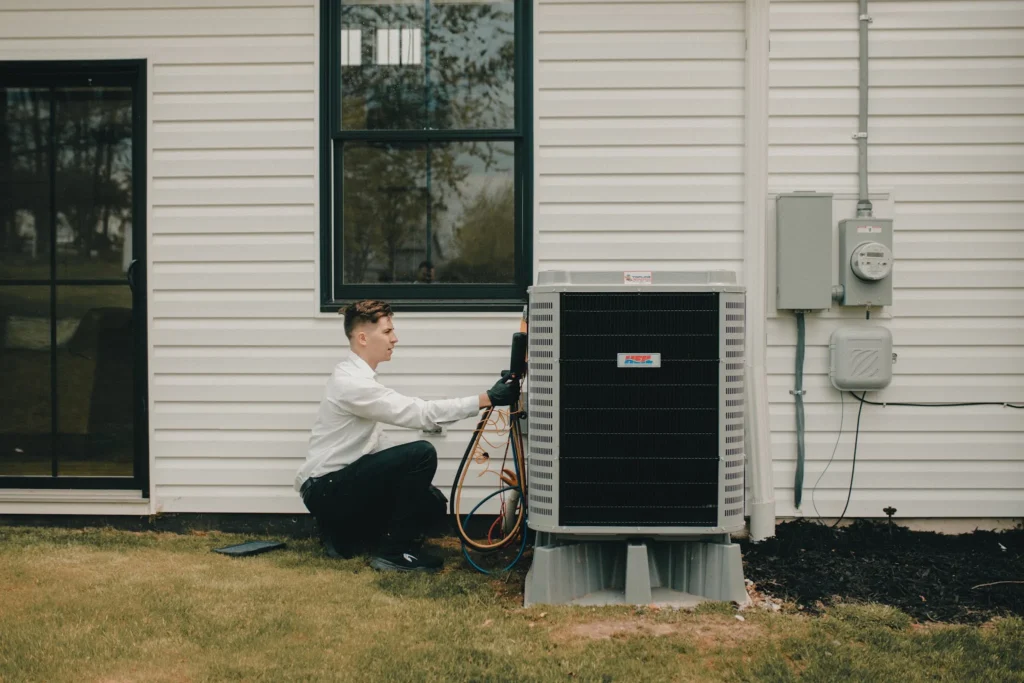
Replace the furnace and AC together when both need replacement soon and a combined proposal saves work or improves the system design. If one is sound, keep it. Ask for separate and combined estimates before deciding.
A furnace failure in the fall raises a second question: what should you do with the air conditioner attached to it? You may not have used the AC for weeks, but its age, condition, and connection to the indoor equipment can change the best replacement plan.
You do not have to buy a new air conditioner every time you replace a furnace. You also should not assume two older pieces of equipment will be cheaper to replace on separate visits. The answer comes from comparing the actual systems and the actual scope of work in your home.
The short decision guide
| What you have | A sensible next step |
|---|---|
| Furnace failed; AC is newer, reliable, and compatible with the proposed setup | Get a furnace-only proposal. Keep the AC unless inspection reveals a specific reason it cannot stay. |
| Furnace failed; AC is also aging, unreliable, or no longer meeting your needs | Compare furnace-only and combined replacement proposals. |
| AC needs replacement; gas furnace is sound | Compare a new central AC with a heat pump that may use the furnace as backup, if a suitable combination is available. |
| Both heating and cooling need replacement | Compare a furnace and AC, a heat pump with appropriate backup, and any other setup that fits the home. |
The equipment’s age helps frame the question; its condition and the home’s needs decide it. ENERGY STAR recommends considering replacement for a furnace over 15 years old, but that is a prompt to evaluate, not an expiration date. If you are still deciding whether the furnace needs replacement, read our furnace repair-or-replace guide.
When replacing both can make sense
Both systems are nearing replacement
If your furnace and AC were installed around the same time, check their labels and service histories. A failing furnace beside an AC that struggles, has needed repeated repairs, or no longer cools the house well is a strong reason to compare both options now.
Doing both projects together may avoid a second visit and some repeated work. The amount saved depends on the installation. Ask for written proposals showing the furnace-only project and the complete heating-and-cooling project so the difference is visible. Do not assume a bundle is a bargain without seeing that comparison.
Our guide to AC lifespan explains why age alone cannot settle the AC decision.
The new design calls for changes to shared components
A furnace and central AC share parts of the air-distribution setup, including the blower and ducts. A new cooling system also needs an indoor coil matched to the outdoor equipment. AHRI certifies the performance of matched indoor and outdoor cooling combinations, rather than the outdoor unit alone.
A contractor should check whether the proposed furnace, blower, indoor coil, controls, and existing ducts work together. That does not mean an older AC must automatically be replaced with a new furnace. It means the installer should identify the exact compatibility issue, if there is one, and explain your options.
You want to solve heating and cooling problems together
Sometimes the old furnace and AC are only part of the problem. If rooms are uneven, airflow is weak, or the house has changed since the original installation, simply putting in larger equipment may leave those problems untouched.
This is the right time to evaluate the home’s heating and cooling needs, duct condition, and airflow. You may need a different equipment size, a duct correction, or a different system design. Ask what the proposal will improve and how the installer determined that it will.
When should you replace only the furnace?
A furnace-only replacement is often the better choice when the AC is performing well, its components can remain compatible with the new indoor setup, and you have no reason to expect a near-term cooling replacement.
Get the AC’s actual age from its equipment label rather than assuming it matches the furnace. Ask the estimator to inspect the indoor coil, blower, controls, and ducts and explain whether the cooling system can remain. If it can, a sound AC does not become waste simply because the furnace failed.
The same principle works in reverse. If the AC fails but the furnace is sound, do not assume a whole furnace replacement is required. Request a proposal that keeps it, plus any complete-system option you want to compare.
Could a heat pump be a better replacement than a new AC?
Yes. If you need new cooling equipment, a heat pump can provide both air conditioning and heating. In a suitable home, it may be paired with a gas furnace for dual-fuel operation. That gives you another option besides a furnace and conventional AC.
Whether it makes sense depends on the house’s heating load, the selected equipment’s cold-weather output, compatibility, and your gas and electricity rates. A heat pump is not automatically the least expensive way to heat every house, and a dual-fuel system needs properly configured controls.
Our heating-system comparison walks through gas, oil, heat pumps, and homes without ducts. If the house has no central ducts, ductless mini-splits may be another path.
Will a new furnace force you to replace an R-410A air conditioner?
No. A working R-410A system does not need replacement just because newer cooling equipment uses different refrigerants. An existing system can continue to be used and repaired. EPA explains how existing equipment is treated under the refrigerant transition.
A real compatibility or condition problem may still justify AC replacement. Ask for the specific reason, rather than treating the refrigerant label alone as the answer.
What should your estimate compare?
For a decision you can actually evaluate, request these options where they apply:
- Furnace only: what stays, what changes, and whether the AC remains compatible.
- Furnace plus central AC: equipment, shared work, and any difference in total project scope.
- Heat pump option: heating and cooling equipment, any furnace or backup heat, and how the controls will operate.
Ask for the proposed equipment model numbers, the rated matching combination for new cooling equipment, any duct or electrical work, installation timing, and what happens to existing components. The lowest quote is not necessarily the lowest total project cost if it leaves an imminent replacement or comfort problem unresolved.
If your heat is broken now, tell the estimator. A quick furnace replacement and a new gas utility connection are very different schedules; the project plan should say what is actually available for your house.
Get an answer for your home
Topline Heating & Air offers free, no-obligation in-home estimates for new systems in and around Lancaster, Scranton, State College, Dayton, Canton, Pittsburgh, and Rochester. We can compare a furnace-only replacement with a complete heating-and-cooling system and explain when keeping your current AC makes sense.
Next-day installation is very regularly available. Our average is about four days from first inquiry to completed installation. Actual timing depends on equipment, location, project scope, permits, and scheduling.
Request a free new-system estimate or call (855) 822-2270. Tell us the approximate ages of both systems and which one is giving you trouble.
Repair and maintenance service is available only in Lancaster County. In other markets, appointments are for new-system estimates and installation.