

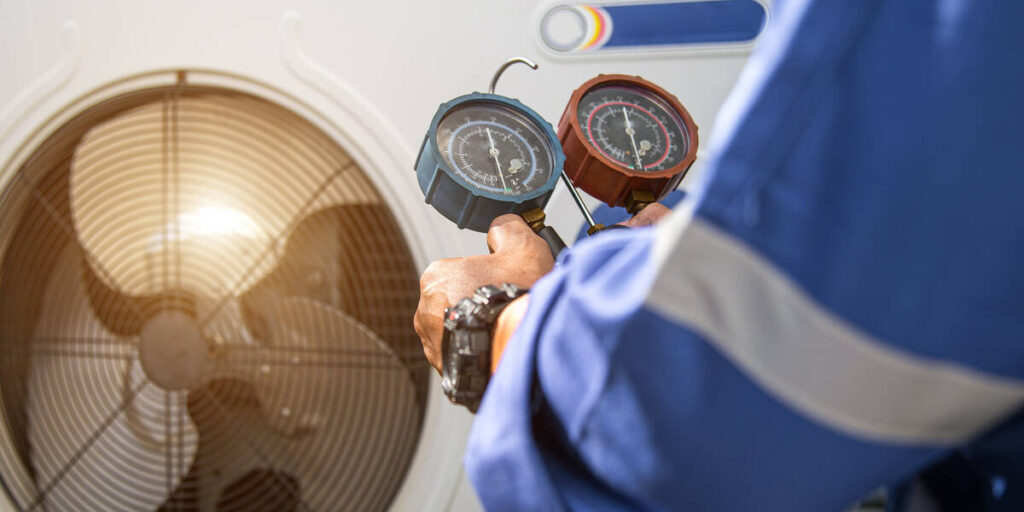
A split system separates the equipment into two parts: an outdoor unit holding the compressor and condenser coil, and an indoor unit holding the evaporator coil and blower, joined by refrigerant lines. A ducted split distributes conditioned air through the ductwork in the home. A ductless mini-split skips the ducts entirely and delivers air straight into a room through a wall-mounted head, which is why it suits older homes, additions and converted spaces that were never ducted.
HVAC systems are incredibly complex, consisting of many mechanical and electrical components that work together to keep your home comfortable throughout the year. It becomes even more complicated when you consider the different types of air conditioning systems on the market, including split HVAC systems.
Split units are a popular choice for many homeowners looking to effectively cool their homes. When considering a new HVAC system, you might wonder, “How do split HVAC systems work?” It’s an important question to consider, especially compared to other AC types. If you’re seeking a reliable heating and air conditioning company in Honey Brook, PA, reach out to your local professionals at Topline Heating & Air today!
As you might expect, split HVAC systems aren’t all the same or right for every home. Let’s take a closer look at how split HVAC systems work.
What Are Split HVAC Systems?
The defining aspect of a split HVAC system lies in its design, which uses two units to perform the cooling process of turning warm air into cool air and distributing it throughout your home.
The indoor unit, which houses the evaporator and may also attach to the furnace, absorbs heat from inside a room and transfers it to the outdoor unit for cooling. The outdoor unit contains the condenser and compressor, so it’s largely responsible for carrying out the refrigeration cycle. If you’ve ever wondered why outdoor AC units always seem to blow hot air out, it’s because that air is coming from inside.
An insulated line connects the two units through a small hole in the wall, allowing the refrigerant gas to transfer between them. Refrigerant is integral to providing cool air as it goes through a continuous conversion process, changing from gas to liquid and back again. In a ductless system the indoor head is often mounted close to the outdoor unit to keep the refrigerant line set short. In a ducted split the outdoor unit sits on a pad outside while the indoor unit sits in a basement, attic or closet.
What About Ductless Mini-Split Air Conditioners?
Also known as multi-split air conditioners, these ductless air conditioners are a more recent version of split HVAC units. They’re fundamentally identical, but where a traditional split may use existing ductwork in a house, mini-splits bypass the use of ducts entirely. A mini-split system is energy-efficient and great for targeted cooling, such as bedrooms that get and stay warmer than other parts of the house.
What Are the Advantages of a Split HVAC System?
There are many reasons split HVAC systems are a common choice for homeowners seeking year-long comfort out of their homes. If you’re weighing your options after considering the question “How do split HVAC systems work,” then you’ll want to consider the advantages of getting one.
Affordable Installation
A split unit is one of the easier air conditioning systems to install, largely because you don’t need to install ductwork if you’re using it to cool just one section of the house. Where other systems can take multiple days to fully install and require knocking through walls to place ducts, split units usually take a few hours, meaning you can enjoy a nice, cool environment in a relatively short time.
Low Maintenance
Split systems are pretty simple as far as HVAC units go. The extent of maintenance for most homeowners usually boils down to cleaning or replacing an air filter each month. Mini-split HVAC systems have a particularly clean and compact design thanks to the lack of ductwork. This means most repairs will involve either the indoor or outdoor unit, both of which are easily accessible.
Targeted Cooling
One of the biggest advantages of using a split system is the level of flexibility it offers throughout the building. When using a split system air conditioner, different areas throughout your home will have their own units and thermostats. This lets you control the temperature and airflow for each area, which is perfect for living situations where some people prefer a cooler indoor environment than others.
Cost-Effective Energy Efficiency
Because a split HVAC system is easier to install with less time required to get up and running, it means they’re more cost-effective than other, more involved options. Mini-split units are also more energy-efficient since they bypass the need for ducts and only cool certain areas.
Alternatives to Split HVAC Systems
Being aware of the different kinds of HVAC units is key to making an informed decision for your next system installation. Here are some of the alternatives to a split HVAC system.
Packaged Air Conditioner
Where a split HVAC system has two separate units, packaged air conditioners combine all of the components into one unit. These typically control the distribution of air inside through a unit just outside the building connected through a nearby hole in the wall.
Packaged units might be a viable option for some homeowners, but they’re more common in commercial buildings, installed either to the side or on top of the roof. They’re also more prone to damage, especially in areas that see more severe weather conditions, due to the main components being outside.
Heat Pumps
Heat pumps are more common in areas with mild winters due to the fact they transfer and redistribute heat, as opposed to generating it. This makes them an energy-efficient option, and modern cold-climate models keep useful heating capacity well below freezing.
Get Professional HVAC Services in Honey Brook Today
If you’re considering a split HVAC system for your home, then we want to hear from you! At Topline Heating & Air, we offer air conditioning services through a professional team of HVAC contractors who receive ongoing training to maintain a top-tier quality standard. We also make things easy to understand by keeping the confusing HVAC terminology to a minimum when providing consultation, such as if you want to find out, “How do split HVAC systems work?”
Whether you’re looking to install a new furnace, repair a water heater, or address a refrigerant leak, we go the extra mile to give you personalized service. Contact Topline Heating & Air at (855) 822-2270 and receive a free estimate on a new HVAC system today!