

HVAC replacement quotes vary because they include different equipment, different duct or electrical work, and different installation services. Before you compare totals, make sure each contractor is solving the same problem. An in-home estimate shows you exactly where the proposals differ.
If you have two quotes for a new furnace, air conditioner or heat pump, the price gap can be startling. One proposal may be a straightforward equipment swap. Another may fix poor airflow, replace a mismatched cooling system, or include the work needed to install the new equipment properly. If the furnace itself is the open question, our guide on how old is too old for a furnace can help you decide whether to replace it now.
Neither total tells you enough on its own. You need to know what each company found, what it recommends, and exactly what the job includes.
Why can two HVAC replacement quotes be so different?
| What may differ | Why it matters |
|---|---|
| The recommended system | A furnace and central AC, a central heat pump, a ductless mini-split and a packaged system solve different problems. |
| Equipment size and performance | The old unit’s size is not proof it was right for the home. The new system should be selected for the home’s heating and cooling needs. |
| What happens to existing equipment | One quote might replace a single component; another might include a matched indoor and outdoor cooling system. |
| Ductwork and other installation work | Airflow problems, electrical changes, venting, drainage and other site-specific work may be in one proposal and left out of another. |
| Installation and follow-through | Permits, setup, performance checks, warranties and labor coverage can all differ. |
Two contractors can both write “new AC quote” at the top of the page. One may cover only the outdoor unit. The other may include a matching indoor coil and the work needed to deliver the right airflow. Those are different jobs, even when the requests look identical.
“They not only replaced an outdated A/C system from the 70’s but ensured it was compatible to my current system. I couldn’t be happier with the results!”
— Kenneth L., 5-star Google review
ENERGY STAR recommends a home evaluation and written, itemized estimates when you hire a heating and cooling contractor. Its bid comparison checklist has you compare sizing, matched equipment, ductwork and installation checks, not price alone.
Why does an in-home estimate matter?
A photo of your old furnace or the square footage of your house can start a conversation. It can’t show the whole job.
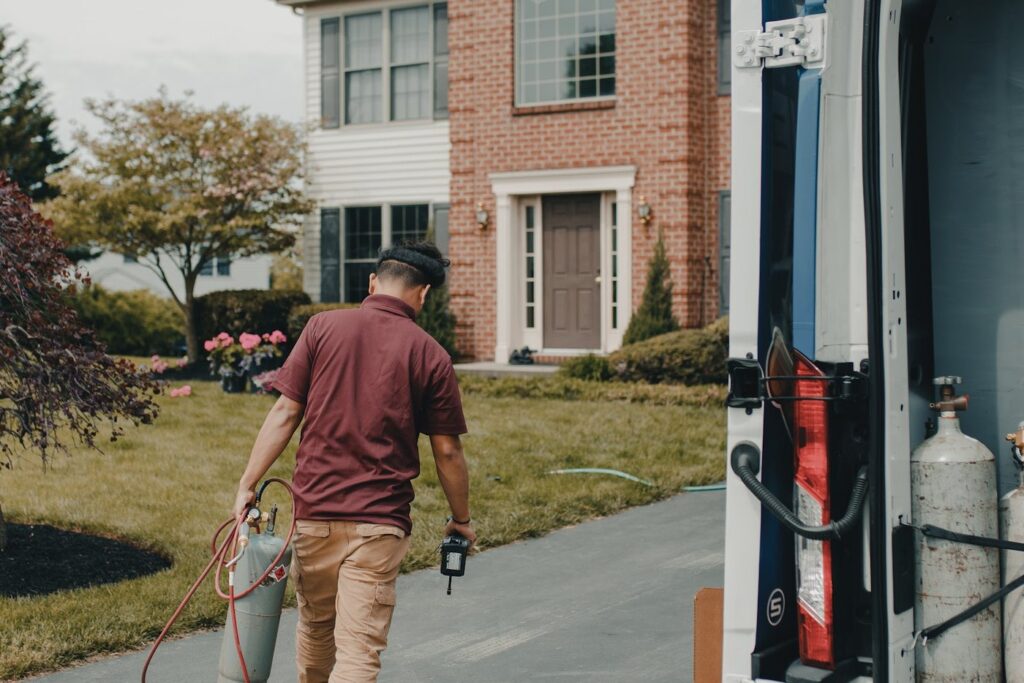
When we visit, we find out which rooms are uncomfortable, look at the existing equipment and where it sits, consider the layout, and talk through what you want the new system to do. If the home has ducts, their condition and their ability to move air matter. If it doesn’t, a ductless option may be worth a look.
The visit also separates an equipment problem from a broader comfort problem. A bigger new system won’t fix a room that gets too little air. And replacing every component isn’t always the right move when part of your existing system still has useful life.
“The gentleman that came to do the estimate was awesome! He was so informative and broke everything down for us.”
— Holly P., 5-star Google review
The equipment selection should rest on your home’s heating and cooling requirements, not a guess based on the old unit. ENERGY STAR advises verifying system size with a load calculation, commonly called Manual J. The measurements needed to finalize a design depend on the project, so an initial estimate shouldn’t be mistaken for every diagnostic test or design step.
Why does Topline offer free, no-obligation in-home estimates?
We want you to understand your new-system options before you commit to one, and we can’t recommend the right equipment without seeing your home.
Free means there is no charge for the new-system estimate. No obligation means you don’t have to buy a system from us. You get the recommendation and the proposed scope, then you decide.
That matters most when the answer isn’t obvious. Your home might be best served by a new gas furnace, a furnace and AC together, a central heat pump, a mini-split system, or something else. Sometimes replacement isn’t the right next step, and we’ll say so. Our heating-system options guide walks through several of those choices.
“Zach was very thorough and professional with his description of the installation of the mini-split system. He quoted all of the options I requested, and we found one to fit my price range.”
— 5-star Google review
The point of visiting your home is to make the recommendation, and the estimate, about your house.
How should you compare HVAC replacement quotes?
Ask each company these seven questions. The answers should be in the written proposal, or the contractor should explain them clearly before you sign.
- What problem is this system meant to solve? Is it replacing failed equipment, improving comfort in certain rooms, adding cooling, or changing how the whole home is heated?
- Why was this system and size recommended? Ask how the home’s heating and cooling needs were determined, especially if contractors propose different capacities.
- What exact equipment is included? Compare model numbers and the indoor and outdoor components, not just brand names or efficiency labels. For central AC and heat pumps, ask whether the components form a properly matched system.
- What work is included beyond the equipment? Clarify duct, electrical, refrigerant-line, venting, drainage, thermostat and removal work where it applies. Ask what’s excluded or subject to an additional charge.
- What has to happen before the installation counts as complete? Ask about permits where required and the checks that fit the system, such as airflow and cooling-system setup. Our guide to what to expect on installation day shows what a finished job looks like.
- What protection comes with the job? Compare equipment warranties, labor coverage, any registration requirements, and who to call if something doesn’t work as expected.
- What are the complete cost and schedule? If financing is offered, compare its terms separately from the installation price. Financing is available through Topline, subject to credit approval, eligibility and lender terms. Also ask what must happen before an installation date can be confirmed.
You can use ENERGY STAR’s printable comparison checklist alongside your proposals. If one contractor recommends replacing your furnace and AC together and another recommends replacing only one, our guide to that decision can help you frame the follow-up questions.
Signs a quote may be incomplete
A thin proposal isn’t always a bad one, but these are worth a question before you sign:
- No one looked at the home. A quote built only from a phone call or a photo can’t reflect your ducts, electrical service or layout.
- No model numbers. If the proposal lists brands but not the equipment, you can’t compare it with another quote.
- No explanation of sizing. You should be able to find out how the capacity was chosen.
- Unclear scope. If duct, electrical or removal work isn’t listed as included or excluded, ask.
- A deadline to decide today. A good proposal still makes sense tomorrow.
Is the lowest HVAC quote a bad choice?
No. A lower quote may reflect a simpler, entirely appropriate solution. A higher quote may include work your home needs, or equipment and features you don’t.
Ask each contractor to explain the difference in scope. If two proposals recommend different systems, find out what each company observed and how its recommendation addresses the problem you described. If a major item is missing from a proposal, ask whether it’s unnecessary, excluded or still to be determined.
The best choice is the proposal whose recommendation, complete scope and total cost make sense for your home.
Get an estimate you can actually use
If your heating or cooling system needs replacement, Topline Heating & Air offers free, no-obligation in-home estimates for new systems in and around Lancaster, Scranton, State College, Dayton, Canton, Pittsburgh and Rochester. We’ll compare the options for your home and explain why we recommend one.
Request your free new-system estimate. If your current system has failed, tell us when you reach out. Next-day installation is very regularly available, and our average is about four days from first inquiry to completed installation. Your timing depends on the equipment, work required, permits, location and schedule.